
Air Quality
Tracing and Eliminating Odors in Commercial Buildings
Every odor complaint has a physical source. Masking agents just add a second smell on top of the first.
3 min read · Reviewed by Gabriel M.
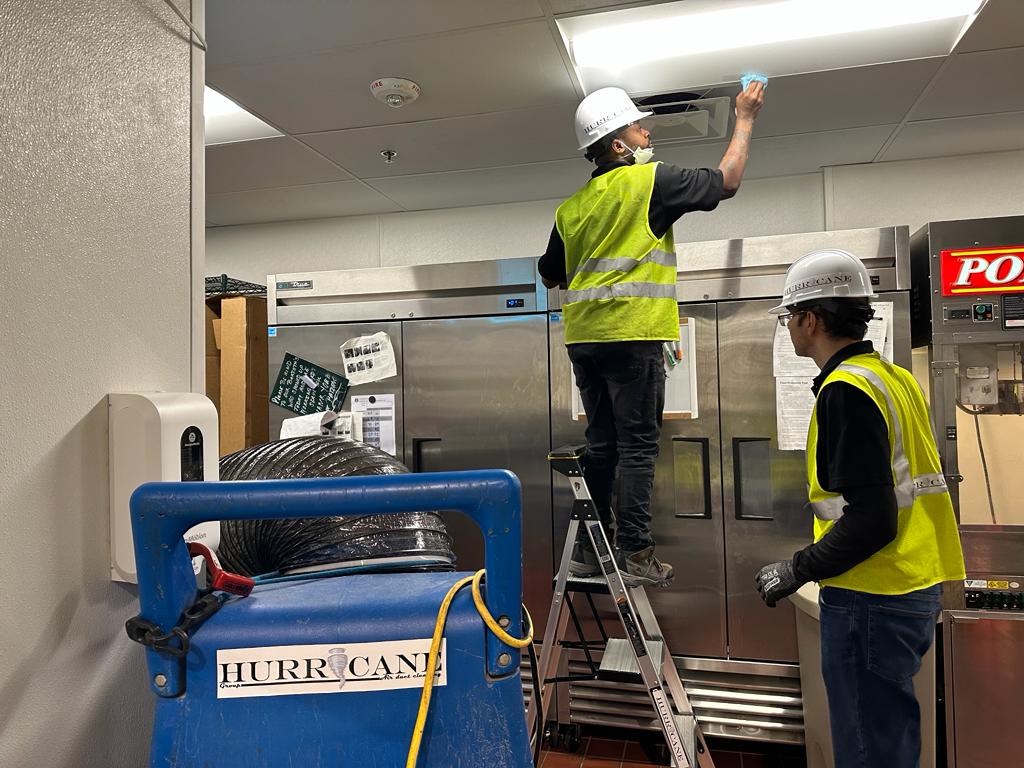
Restaurant kitchen — ceiling vent cleaning beside reach-in refrigeration
Classify the smell first
Musty and earthy points to moisture and microbial activity in the air path. Greasy or burnt points to kitchen exhaust, grease-laden vapor migration or a fouled belt. Sour points to drains, traps and standing water. Chemical points to off-gassing materials, cleaning products drawn into a return, or an outside-air intake sited next to a loading dock or generator.
Trace it with the system, not your nose alone
Note whether the odor strengthens at start-up, persists while running, or appears only in specific zones. Start-up spikes implicate the ducts and unit. Zone-specific odors implicate a local return path or a plumbing trap. Building-wide odors implicate outside air or a shared plenum.
Fix in the right order
Remove the physical source, restore drainage and ventilation, clean the affected air path, and only then consider treatment. In food-service buildings we frequently find the supply side is fine and the real work is in the exhaust system.
Common questions
- Do ozone generators help?
- We do not recommend them in occupied commercial space. Ozone is a respiratory irritant and does not remove the source.
- Why does the smell come back every Monday?
- Systems set back over a weekend let moisture and stagnant conditions build; the Monday start-up pushes it through the building.
- Can you find the source without tearing the ceiling apart?
- Usually. Camera inspection, pressure observation and zone testing narrow it down before anything is opened.
Keep reading
Talk to a commercial crew, not a call center
Commercial Air Care services commercial facilities across Metro Atlanta with IICRC-certified crews and per-unit photo documentation on every job.