Air Quality
Mold in Commercial Ductwork: Identification and Response
Not every dark patch is mold, and not every mold finding is a remediation job. The response depends on the source of the moisture.
3 min read · Reviewed by Gabriel M.
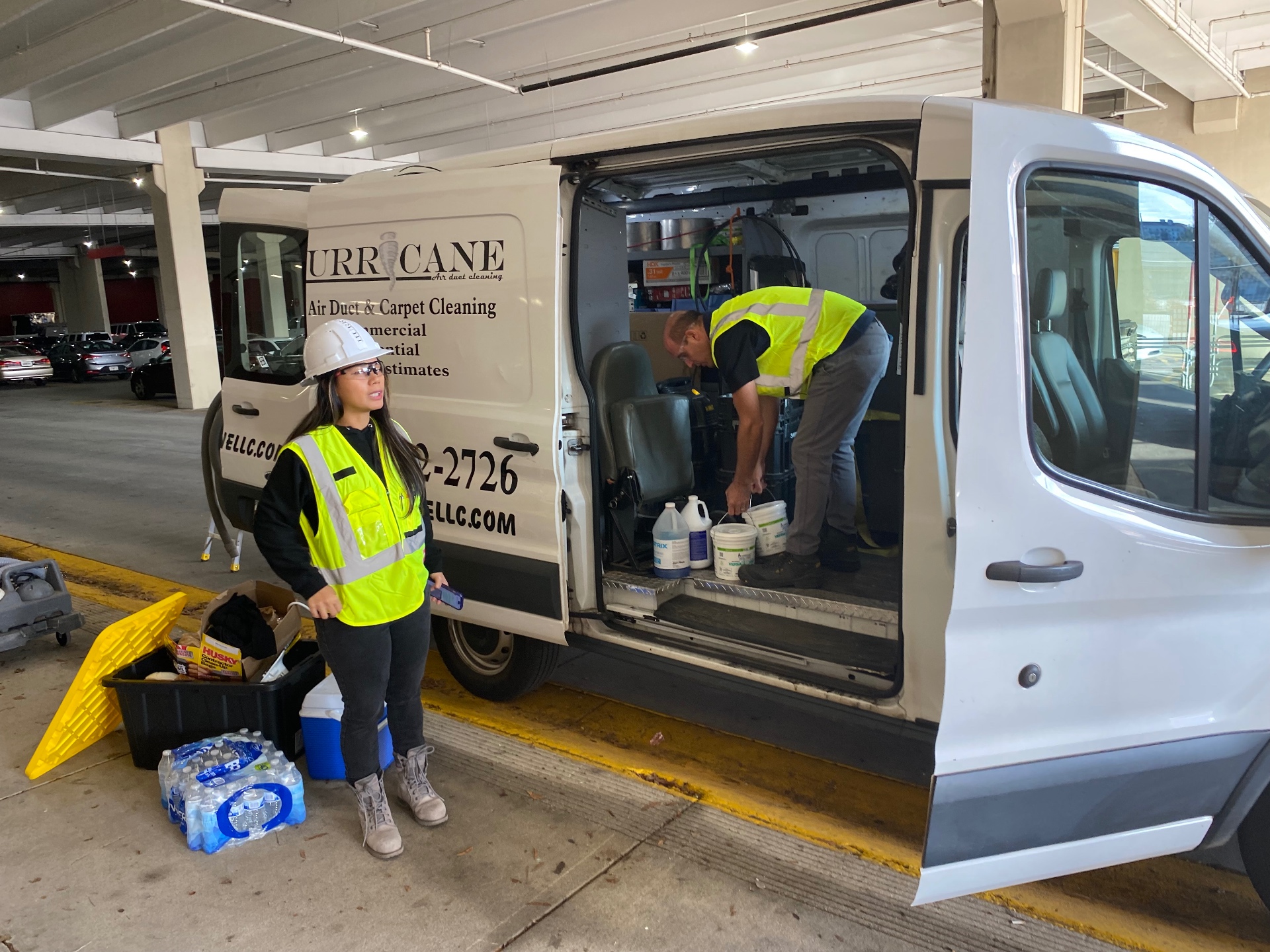
Hurricane service van — on-site at commercial garage
Telling growth from soil
Dust deposits are grey, even and dry. Microbial growth is patchy, often coloured, concentrated near moisture sources, and typically found downstream of the coil, on wet liner, around pans and at poorly sealed outside-air intakes. Smell is a strong hint: soil has no odor, growth does.
Where it matters, sampling settles the question. Visual identification is a screening step, not a diagnosis.
Fix the water, or it comes back
Growth is a moisture problem wearing a biology costume. Overflowing pans, blocked condensate lines, roof leaks above duct runs, uninsulated duct sweating in humid plenums and excessive outside-air humidity are the usual sources in Metro Atlanta. Cleaning without correcting the source buys you a season at most.
Cleaning versus remediation
Light surface growth on non-porous duct metal, with the moisture source corrected, is generally a cleaning-and-treatment scope. Growth on porous internal liner, on fiberglass board, or across a significant area is remediation: containment, negative pressure, removal of affected porous material, and post-work verification.
We hold mold remediation licensing and run both scopes, which means the recommendation is driven by what we find rather than by what we are equipped to sell.
Documentation protects you
Photographs of conditions found, the moisture source identified, the scope performed, products applied and post-work verification form the record a building owner needs if a tenant, insurer or health authority asks later.
Common questions
- Should we test before or after?
- Before, to establish the condition and scope. Post-remediation verification then shows the work achieved its objective.
- Can antimicrobial spray solve it?
- No. Treatment applied over growth and moisture is cosmetic. Remove the growth, fix the water, then treat if appropriate.
- Do occupants need to leave?
- For contained duct remediation, usually not — the area is isolated under negative pressure and work is scheduled off-hours.
Keep reading
Talk to a commercial crew, not a call center
Commercial Air Care services commercial facilities across Metro Atlanta with IICRC-certified crews and per-unit photo documentation on every job.