
Air Quality
Indoor Air Quality in Office Buildings: A Practical Approach
Four levers, one order of operations. Most office complaints resolve without buying anything exotic.
3 min read · Reviewed by Gabriel M.
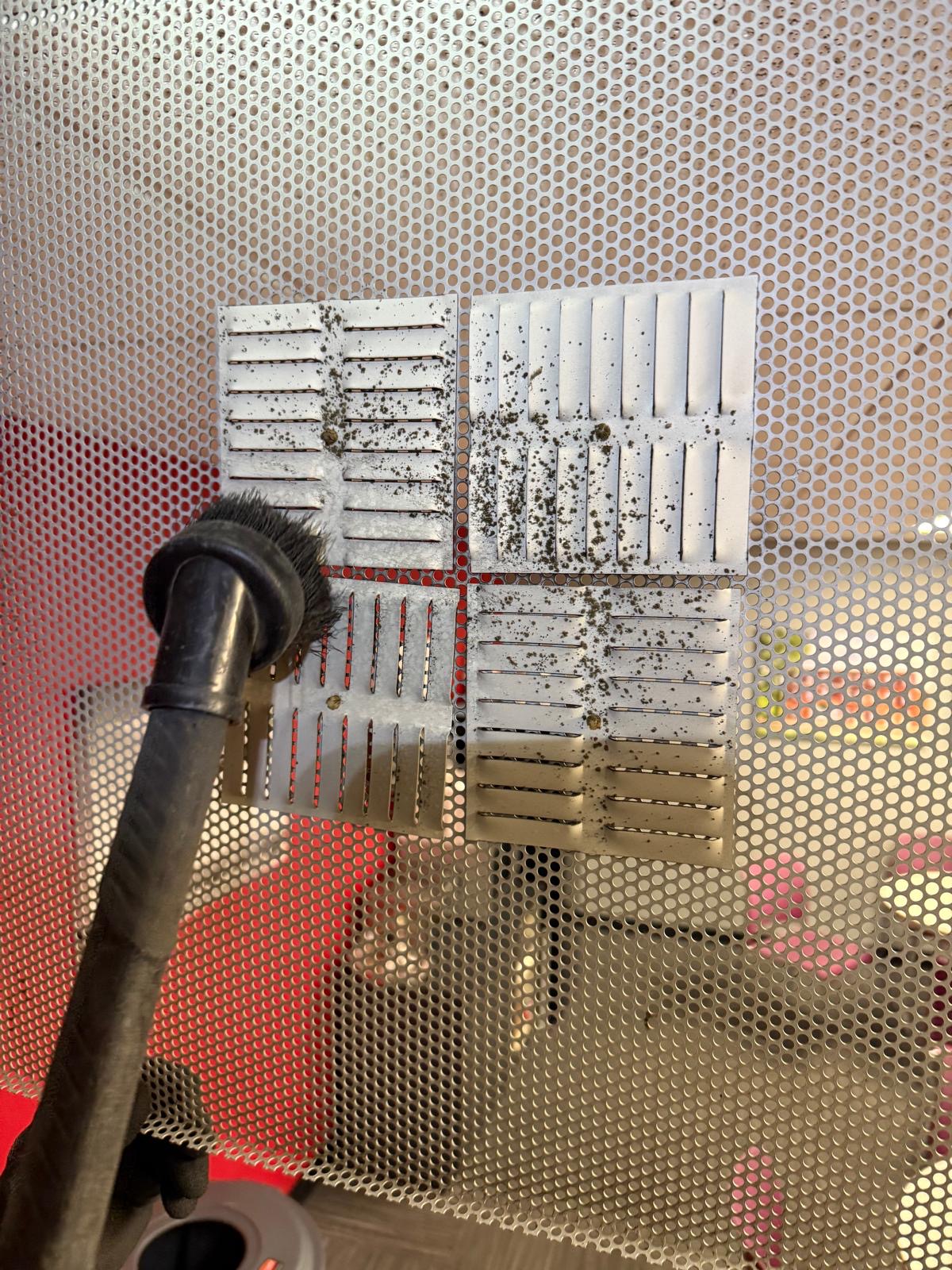
Office HVAC — pre-filter brushing with visible particulate capture
The four levers
Ventilation brings in outdoor air. Filtration removes particles from what circulates. Humidity control governs comfort and microbial risk. Cleanliness determines whether the air path adds contamination on the way through. Solving complaints means identifying which lever is failing rather than upgrading all four.
Reading a complaint pattern
Complaints clustered in one zone point at that zone's air path or a local source. Complaints that peak in the afternoon point at ventilation rate under full occupancy. Complaints that spike Monday morning point at weekend setback and stagnation. Building-wide complaints after a renovation point at construction contamination.
Work in this order
Verify outside-air delivery and damper operation. Confirm filtration is appropriate and actually seated without bypass. Check humidity and condensate handling. Then clean the air path — coil, blower, ducts — so filtration and ventilation are not fighting a dirty system. Testing before and after turns the whole thing from an argument into a record.
Common questions
- Will higher-MERV filters fix complaints?
- Only if particles are the problem and the system can handle the pressure drop. A filter upgrade on an undersized fan makes things worse.
- Are portable purifiers worth it?
- They help in a specific room with a specific problem. They are not a substitute for fixing the building system.
- How do we prove improvement?
- Baseline testing before the work and the same tests afterward, with the maintenance record attached.
Keep reading
Talk to a commercial crew, not a call center
Commercial Air Care services commercial facilities across Metro Atlanta with IICRC-certified crews and per-unit photo documentation on every job.