Compliance
The Documentation a Commercial Duct Cleaning Should Produce
If the work is not documented per unit, you cannot prove it happened. Here is what a complete package contains.
3 min read · Reviewed by Gabriel M.
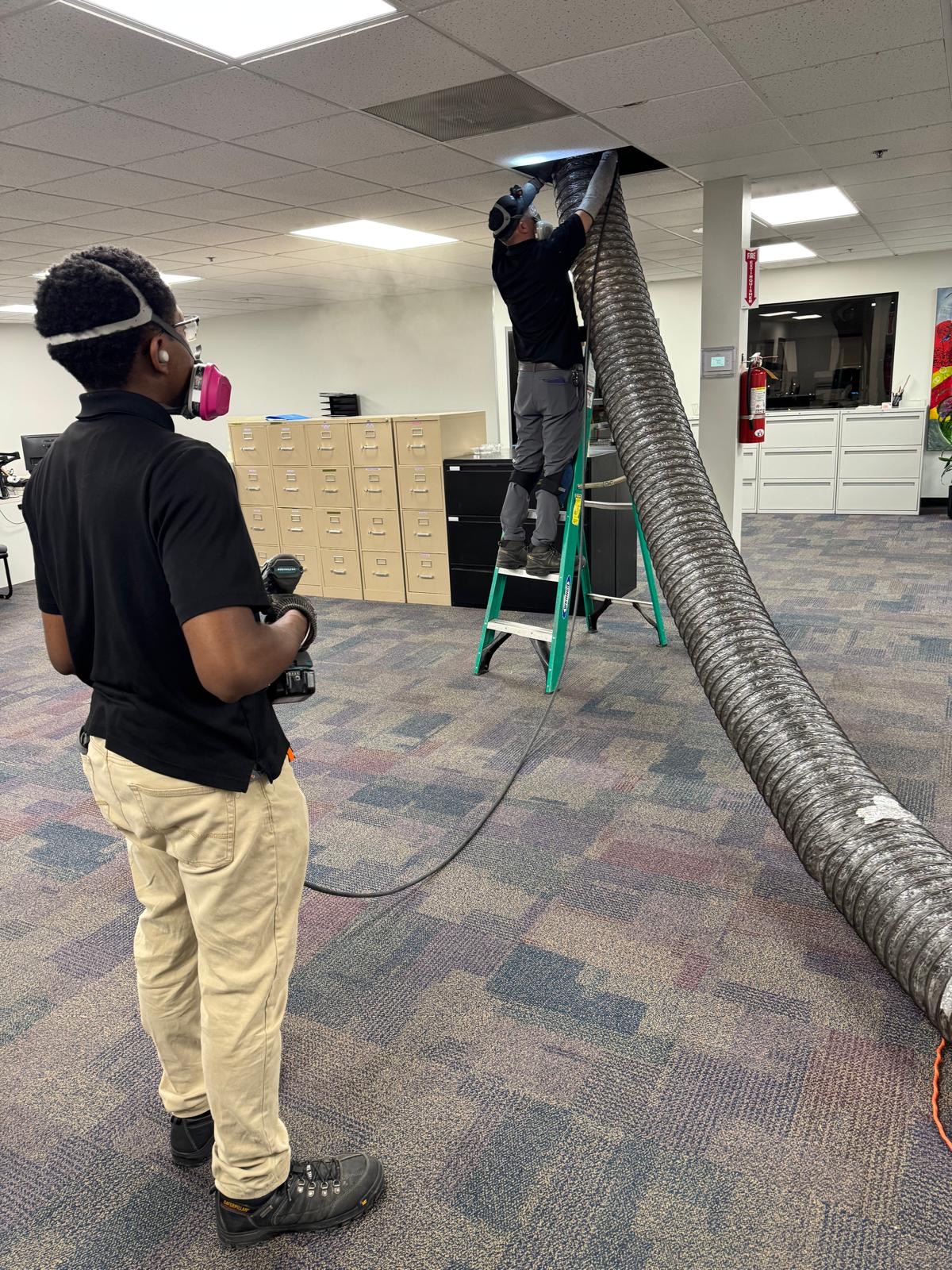
Open-plan office — agitation and HEPA vacuum across the trunk line
What a complete report contains
Documentation is the part of the job that outlives the crew. It is what you hand to an inspector, an insurer, a corporate facilities auditor or the next person in your role.
- ✓ Unit-by-unit inventory with location and equipment identifiers
- ✓ Before-and-after photographs for each unit and representative duct runs
- ✓ Scope performed: duct footage, components serviced, access points created and sealed
- ✓ Products applied, with EPA registration details where treatments were used
- ✓ Conditions found that fall outside the cleaning scope, with photos
- ✓ Filters installed, including type and MERV rating
- ✓ Technician names, certifications, dates and service hours
- ✓ Post-cleaning verification and system restart notes
About certificates of cleanliness
A certificate is a summary sheet, not evidence in itself. Its value comes from the photo record and scope detail behind it. A certificate issued with no supporting documentation is a piece of letterhead.
Where you will actually use it
Insurance renewals and claims, health inspections in food service and healthcare, tenant or union air-quality complaints, green building and ESG reporting, and capital planning for equipment replacement. Keep the packages together as a running history for the building.
Common questions
- How long should we retain the reports?
- Keep them for the life of the equipment. Prior-service history is the fastest way to scope the next job accurately.
- Can we get the photos digitally?
- Yes — our reports are delivered as a digital package organized by unit.
- Will this satisfy our insurer?
- In our experience, per-unit photographic evidence plus a scope statement is what insurers actually ask for.
Keep reading
Talk to a commercial crew, not a call center
Commercial Air Care services commercial facilities across Metro Atlanta with IICRC-certified crews and per-unit photo documentation on every job.