Compliance
NADCA Standards in Plain Language
What the standard requires, translated out of trade-association language into things you can check on site.
3 min read · Reviewed by Gabriel M.
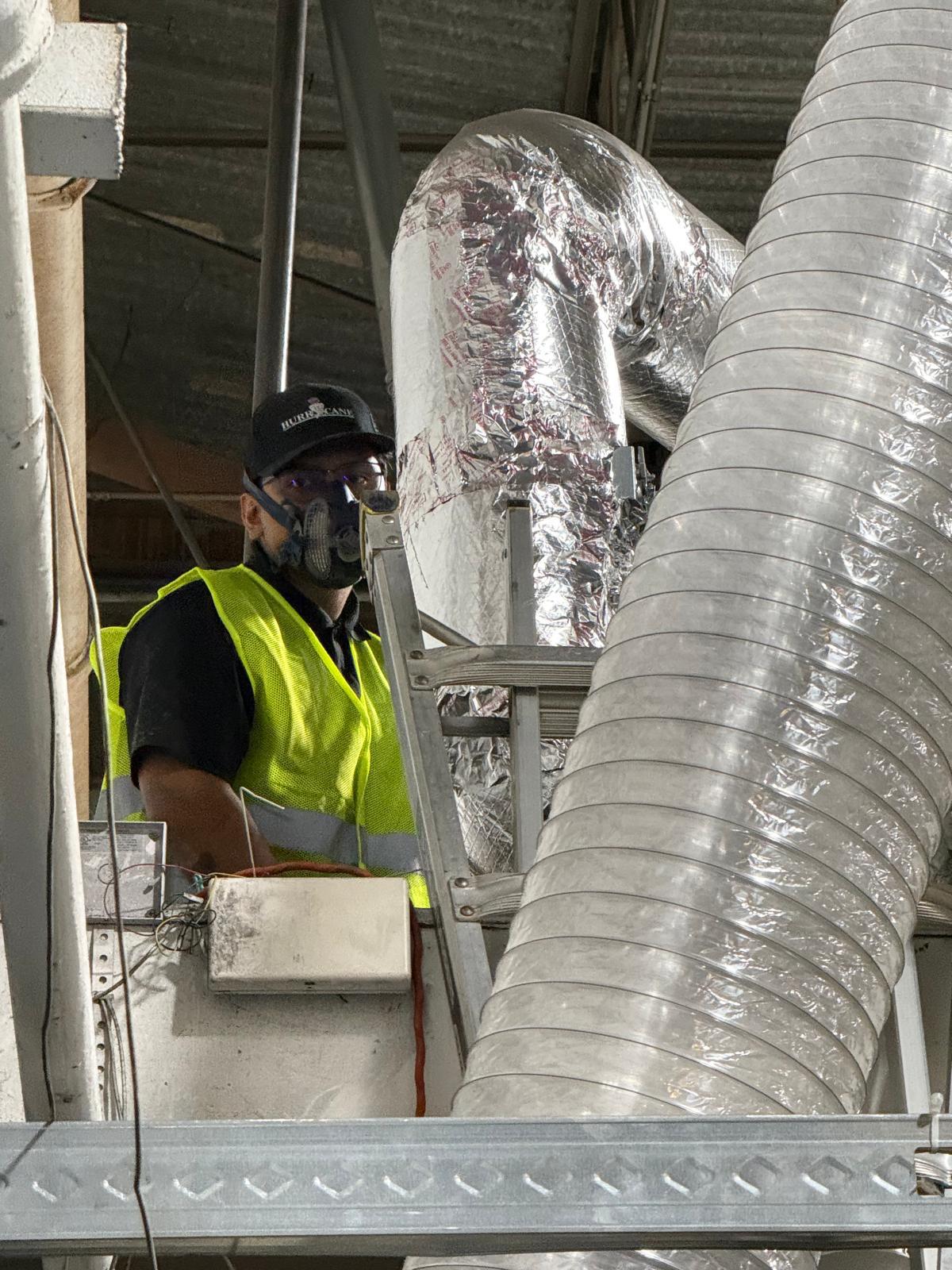
Factory ceiling work — technician in respirator servicing insulated supply duct above structural beams
The core requirements
The industry standard for HVAC cleaning is built on a few non-negotiables: contaminants must be physically removed rather than treated in place; the system must be under negative pressure while it is being cleaned; every component of the air path, including the equipment, falls within the system; and the result must be verifiable by inspection.
How to check compliance on site
Walk the job. Is a collection unit running and connected to the section being worked? Is the run beyond the work zone blocked off? Are access openings being capped with rigid closures rather than tape? Is the air handler on the work list, or only the ducts? Those four observations tell you most of what you need.
What the standard does not do
It does not set a cleaning frequency for your building, it does not make treatment mandatory, and it does not certify the outcome on its own. Frequency is an occupancy and condition question, which is why our assessments recommend an interval per unit rather than a blanket number.
Common questions
- Is following the standard legally required?
- It is an industry standard rather than a statute, but insurers, specifiers and corporate facility standards frequently reference it.
- Does the standard require antimicrobials?
- No. Treatment is conditional on documented need and must use products registered for HVAC surfaces.
- Does it cover kitchen exhaust?
- Kitchen exhaust is governed separately under fire-code requirements for grease-handling systems.
Keep reading
Talk to a commercial crew, not a call center
Commercial Air Care services commercial facilities across Metro Atlanta with IICRC-certified crews and per-unit photo documentation on every job.