Process
The Commercial Duct Cleaning Process, Step by Step
Seven stages from first inspection to the final photo record, and why the order matters more than the equipment brand.
3 min read · Reviewed by Gabriel M.
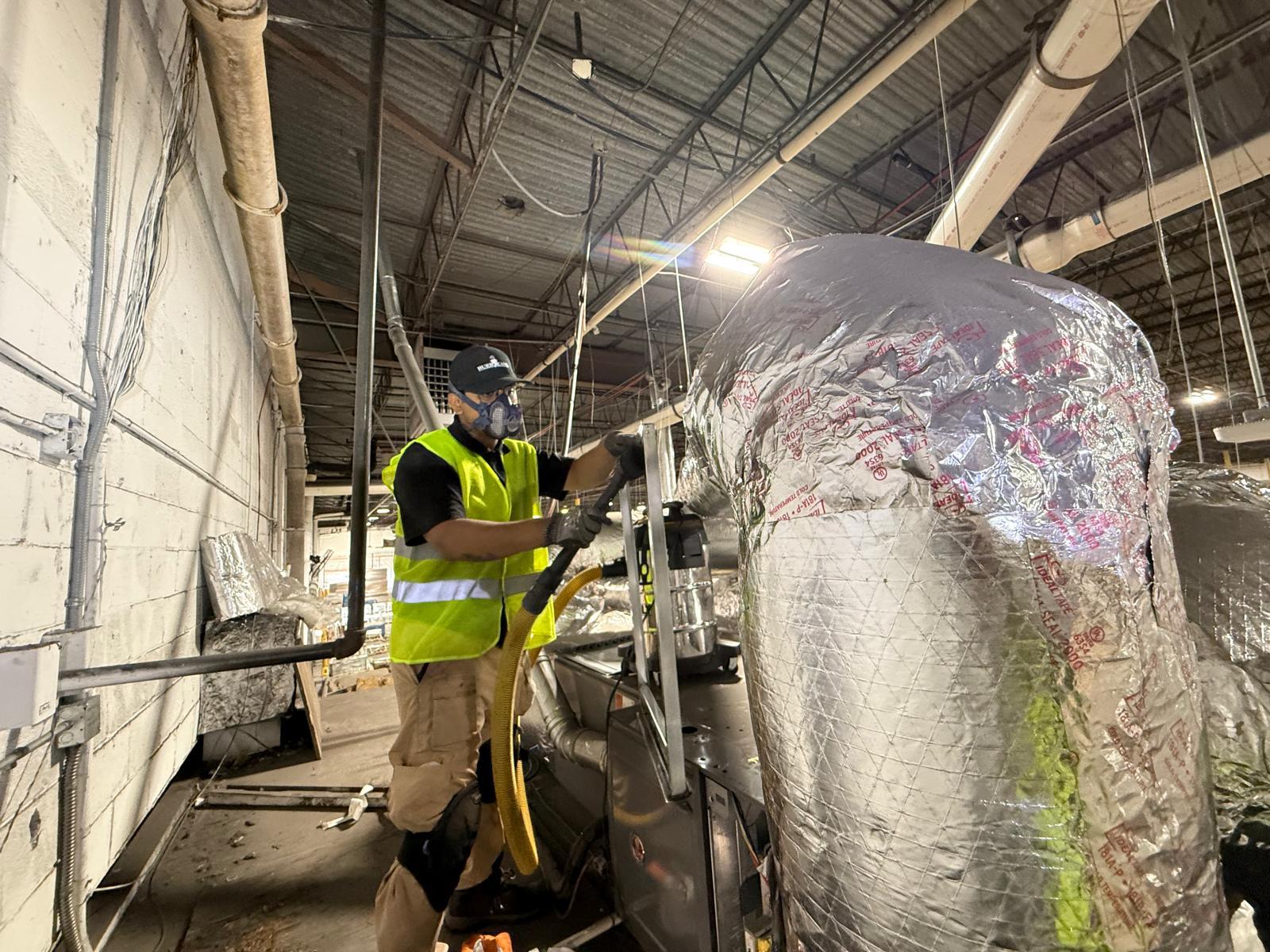
Industrial plant — HEPA negative-air cleaning of large insulated flex duct on the production floor
1. Inspection and scope
Nothing is quoted before the system is opened. Technicians pull filters, inspect the coil face and blower, camera representative duct runs, and note construction type — internally lined, bare metal, fiberglass board or flex. That determines which agitation tools are safe to use.
2. Containment and protection
Work areas are masked, floors protected, and in sensitive occupancies a HEPA-filtered containment is built around the work zone. In occupied Atlanta offices and retail this stage is what keeps the job invisible to tenants and customers.
3. Negative air on the section
A high-capacity HEPA negative-air machine is connected to the duct section and the rest of the run is isolated. Everything dislodged from that point on travels toward the collector rather than into the building. This is the defining feature of source-removal cleaning.
4. Mechanical agitation
Rotary brushes, air whips or compressed-air skipper balls are matched to duct size and liner type, then worked through each run while suction is maintained. Hand cleaning finishes boots, turning vanes and diffuser faces.
5. Coil, blower and pan
The air handler is serviced last on the dirty side of the job: coil cleaned and rinsed, drain pan flushed and the line cleared, blower wheel scraped and vacuumed, cabinet interior wiped. Skipping this stage is the most common shortcut in the trade.
6. Treatment, only where warranted
Where microbial growth was documented, an EPA-registered antimicrobial labeled for HVAC surfaces may be applied after cleaning — never instead of cleaning, and never as a default upsell.
7. Verification and documentation
Access panels are sealed, filters replaced, the system is restarted and observed, and the crew produces the photo record and service report. That package is what you hand to an inspector, insurer or corporate facilities team.
Common questions
- How long does a commercial job take?
- Anywhere from one night for a small suite to several weeks phased across a large plant. Scope is driven by unit count, duct footage and access.
- Does the building need to close?
- Almost never. Phased night and weekend work keeps operations running.
- What happens to the debris?
- It is captured in HEPA-filtered collection and removed from site by the crew.
Keep reading
Talk to a commercial crew, not a call center
Commercial Air Care services commercial facilities across Metro Atlanta with IICRC-certified crews and per-unit photo documentation on every job.