Industries
Restaurants and Commercial Kitchens: Two Systems, Two Scopes
The hood system and the air conditioning are not the same job, and confusing them is how restaurants fail inspections.
3 min read · Reviewed by Gabriel M.
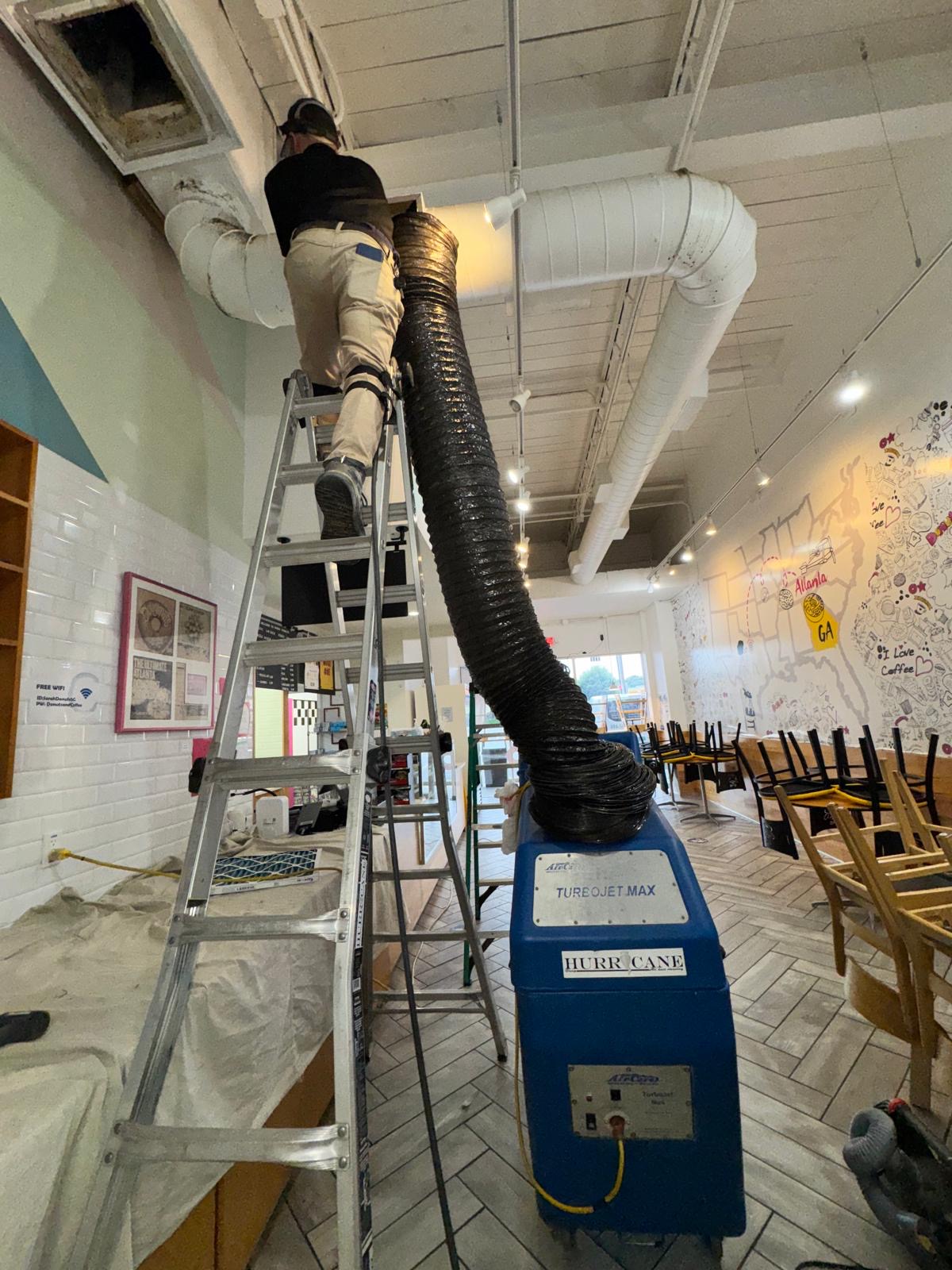
Atlanta coffee shop — technician on ladder cleaning open ceiling supply duct with Hurricane TurboJet Max negative-air machine in the dining room
Two systems under one roof
The grease-handling exhaust system — hood, filters, riser, horizontal duct and rooftop fan — is a fire-code item cleaned to a frequency set by cooking volume and fuel type. The comfort HVAC system that conditions the dining room is a separate scope on a much longer interval.
A cleaning invoice that says only 'ducts' tells you nothing. Insist on knowing which system was serviced and to which standard.
What the exhaust scope must reach
Bare metal from the hood plenum through the full duct run to the fan housing and roof curb, with access panels installed where the run cannot otherwise be reached. Cleaning the filters and hood face while leaving grease in the horizontal run is the most common shortfall we find.
The dining-side system
Grease-laden vapor migrates. Dining-room supply diffusers in Atlanta restaurants routinely show a tacky film that traps dust and produces the stale-kitchen smell customers notice before they can name it. Cleaning the supply side plus the coil resolves it; air fresheners do not.
Do not forget make-up air
Every cubic foot the hood exhausts has to come back in. Neglected make-up air units create negative pressure that pulls in unconditioned outside air, stresses the kitchen HVAC and pushes odors into the dining room.
Common questions
- How often does hood cleaning need to happen?
- Frequency is set by cooking volume — heavy solid-fuel and high-volume frying operations are on the shortest intervals, light-volume kitchens the longest.
- Do you work after close?
- Yes. Restaurant work is scheduled overnight or between services so the kitchen opens clean.
- Is documentation required?
- Fire inspectors and insurers both ask for it, including photos of the duct interior and fan.
Keep reading
Talk to a commercial crew, not a call center
Commercial Air Care services commercial facilities across Metro Atlanta with IICRC-certified crews and per-unit photo documentation on every job.