
Industries
Warehouses and Manufacturing Plants: Process Dust Changes Everything
When the dust in the ducts came from your process, cleaning becomes a safety program rather than housekeeping.
3 min read · Reviewed by Gabriel M.
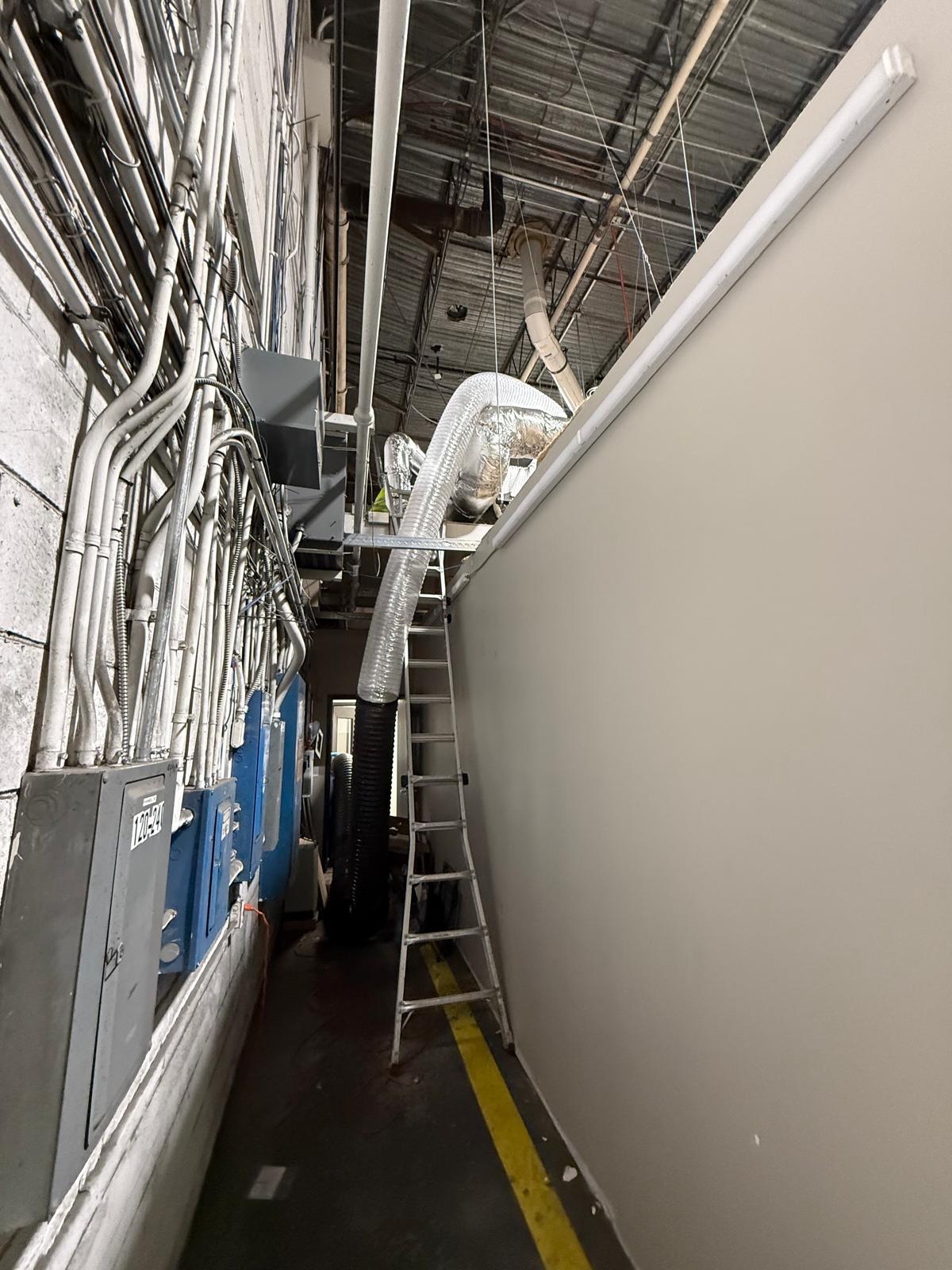
Factory mechanical corridor — flex duct routing past conduit banks and electrical panels
Know what is in the duct
Wood, metal, plastic, textile and food-processing dusts behave differently and some are combustible. Before any agitation begins, the crew needs to know the material, whether it is accumulating on horizontal surfaces and structure as well as in ducts, and whether the work requires ignition-control measures.
Height, structure and access
Industrial ductwork sits among racking, conveyors, sprinkler mains and live power. Work is planned around lift paths and lockout points, and structural dust removal above the duct line is frequently part of the same mobilization because it is where the reload comes from.
Scheduling around production
Plants rarely stop for cleaning. Work is phased into planned maintenance windows, shift changes and shutdown weeks, with the scope split so each window has a defined, completable section.
Common questions
- Do you handle combustible dust environments?
- We scope those jobs with the material and its hazards identified up front, and plan equipment and methods accordingly.
- Can you clean structure as well as ducts?
- Yes — overhead structural and equipment dust removal is commonly combined with the duct scope.
- How often do plants need this?
- Anywhere from annually to every three years, driven almost entirely by process load.
Keep reading
Talk to a commercial crew, not a call center
Commercial Air Care services commercial facilities across Metro Atlanta with IICRC-certified crews and per-unit photo documentation on every job.