Planning
Building a Preventive Maintenance Program That Actually Runs
A calendar, a measurement, and a record per unit. That is the whole program — the difficulty is keeping it running.
3 min read · Reviewed by Gabriel M.
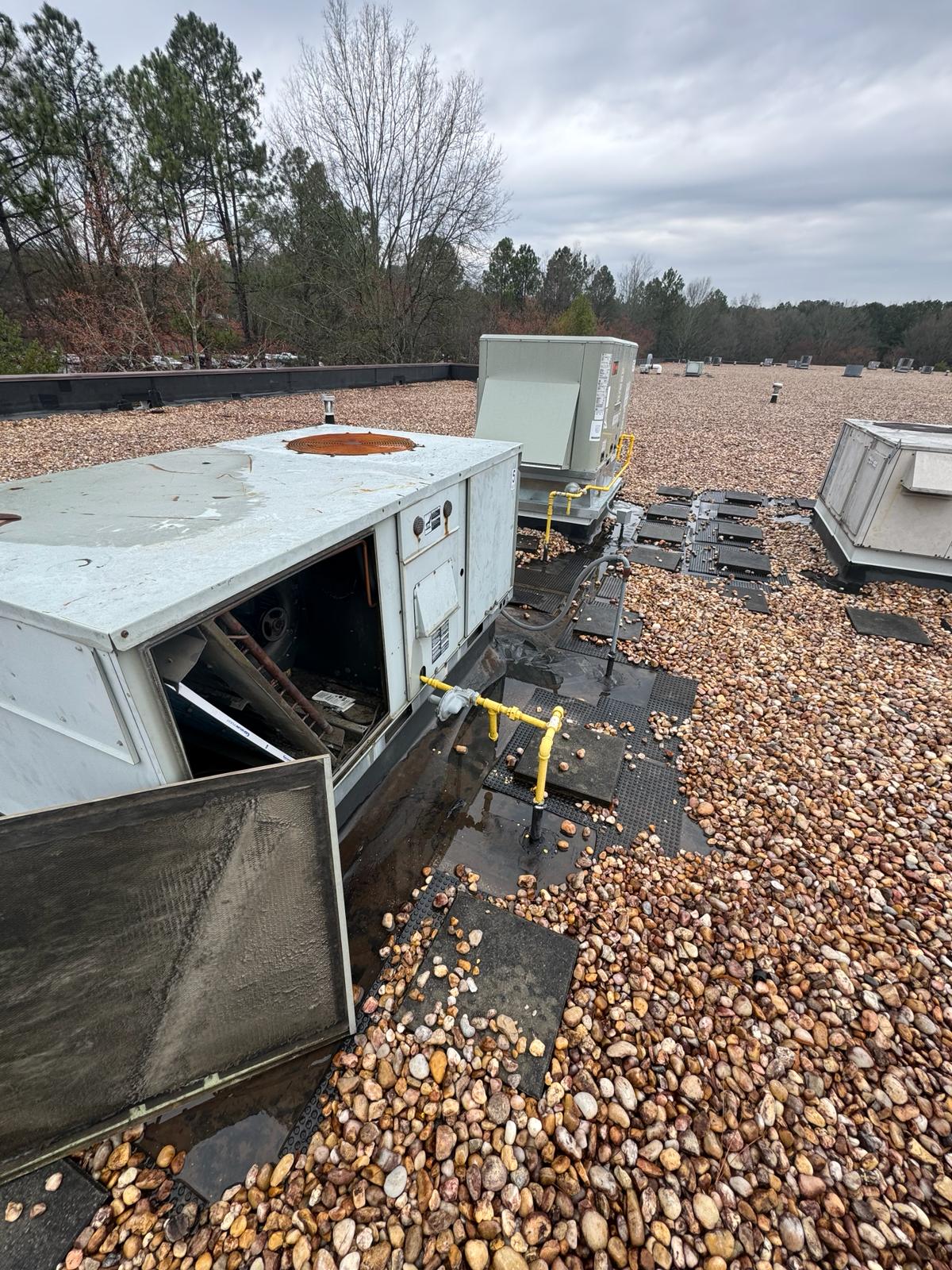
Rooftop survey — packaged unit access panel open with gas line and filter rack visible
A workable annual calendar
In Metro Atlanta the cooling season dominates, so the program is built around it.
- ✓ Late winter: coil and pan service, blower inspection, condensate line clearing before cooling load arrives
- ✓ Spring through fall: filter changes driven by measured pressure drop, monthly drain checks
- ✓ Late fall: heat-side inspection, outside-air damper and economizer check
- ✓ Annual: duct inspection with camera on representative runs, full documentation refresh
- ✓ At the occupancy interval: full source-removal duct and equipment cleaning
Measure, do not guess
Filter schedules based on the calendar are either wasteful or late. Recording pressure drop across the filter bank turns the change-out into a data-driven event and doubles as an early warning that something downstream is restricting.
Why a contract beats ad-hoc calls
Scheduled work is cheaper per visit, gets priority when something fails, produces a continuous record, and spreads spend across the fiscal year. It also means the crew arriving at your building already knows its equipment.
Common questions
- What is the minimum viable program?
- Measured filter changes, annual coil and pan service, and duct inspection once a year. Everything else is refinement.
- Can you work around our fiscal year?
- Yes — programs are commonly phased so large scopes land in the budget period you choose.
- Do you cover multiple sites?
- We service multi-site portfolios across Metro Atlanta with consolidated reporting per location.
Keep reading
Talk to a commercial crew, not a call center
Commercial Air Care services commercial facilities across Metro Atlanta with IICRC-certified crews and per-unit photo documentation on every job.