Operations
How Clean Ductwork Shows Up on the Energy Bill
Restriction costs money in specific, measurable places. Find them before you promise a percentage.
3 min read · Reviewed by Gabriel M.
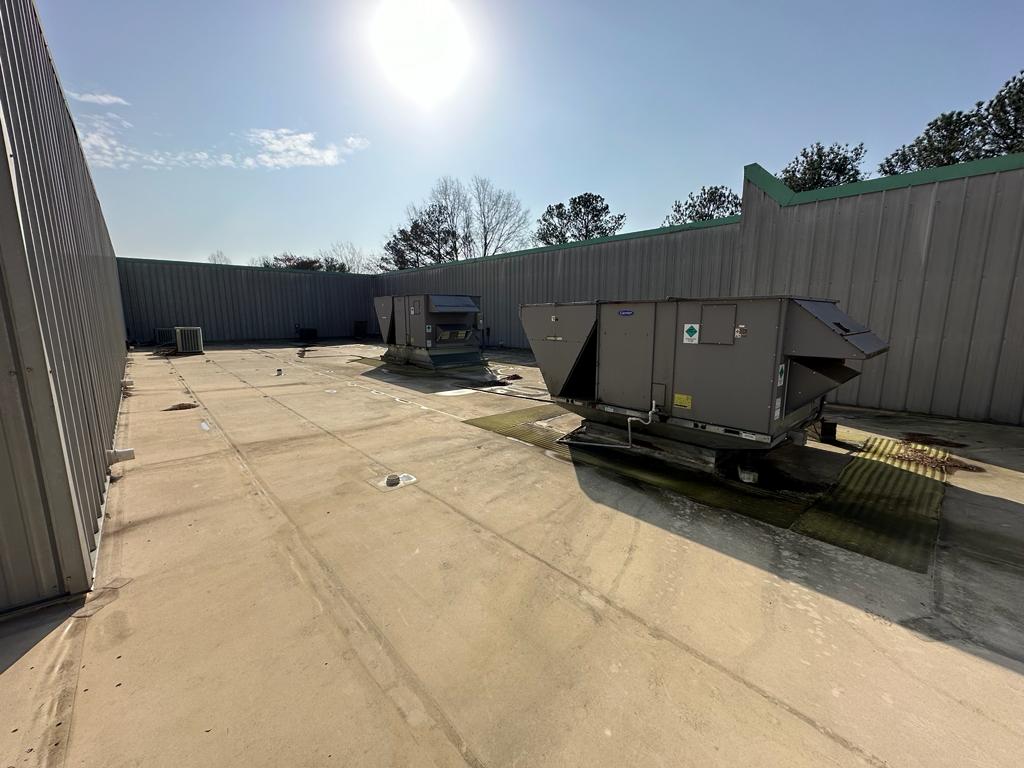
Rooftop survey — Carrier and adjacent RTUs across a flat commercial roof
Where the losses hide
Fouling does not cost energy evenly. A dirty evaporator coil raises approach temperature and forces longer compressor runtime. A loaded blower wheel loses its blade profile and moves less air per watt. Heavily restricted filters increase static pressure across the whole system. Each is small alone; together they push equipment into a permanently inefficient operating point.
Measure instead of estimating
Be suspicious of a flat savings percentage offered before anyone looks at your equipment. What a serious contractor does is record static pressure, temperature split and amp draw before and after, so the change is attributable.
On the utility side, normalize consumption against degree-days for the same months in the prior year. That is the number a CFO will accept.
The savings that are not on the bill
Deferred capital is often the larger number. Blowers that run cooler, compressors that short-cycle less and coils that do not freeze translate into fewer emergency calls and a longer replacement horizon on rooftop equipment that is expensive to crane in.
Common questions
- How much can we actually save?
- It depends entirely on how fouled the system is. A badly loaded coil and blower can show double-digit improvement; a well-maintained system will show little, which is itself useful information.
- What should we measure before the work?
- Static pressure across the filter and coil, supply and return temperatures, and blower amp draw.
- Does cleaning help heating too?
- Yes — airflow restriction affects both modes, and gas heat exchangers are sensitive to low airflow.
Keep reading
Talk to a commercial crew, not a call center
Commercial Air Care services commercial facilities across Metro Atlanta with IICRC-certified crews and per-unit photo documentation on every job.